Hudl: Onboarding & Navigation
Assessing and improving the navigational experience of the Hudl Focus camera app through user research, usability testing, and collaborative design.
My Role
Product Designer
Year
2021
Duration
3 months
Company
Hudl
Overview
Over the summer of 2021, I had the opportunity to work with Hudl as a Product Design Intern. Hudl is a sports technology company focused on providing services for athletes, coaches, and teams to record, analyze, and share game footage.
Hudl uses specific cameras, such as Focus Outdoor and Indoor cameras, to keep track of games. This project focused on assessing the navigational components of the Focus App, the mobile application used to control and set up these cameras.
I worked on several different projects during my internship, including Navigation Design Research, redesign implementations, and collaborative design sessions. This case study focuses on the navigation research project, which became the most impactful initiative I led.
The project spanned three phases: brainstorming pain points with the design team, constructing and running usability tests with real users, and synthesizing findings into actionable recommendations for the full-time design team.
The Challenge
The navigation within the app used to control and set up cameras had been confusing to many users. Installation flows, onboarding sequences, and settings were difficult to navigate, leading to failed setups and support escalations.
How can we improve this experience so that users have a structured and recognizable app experience?
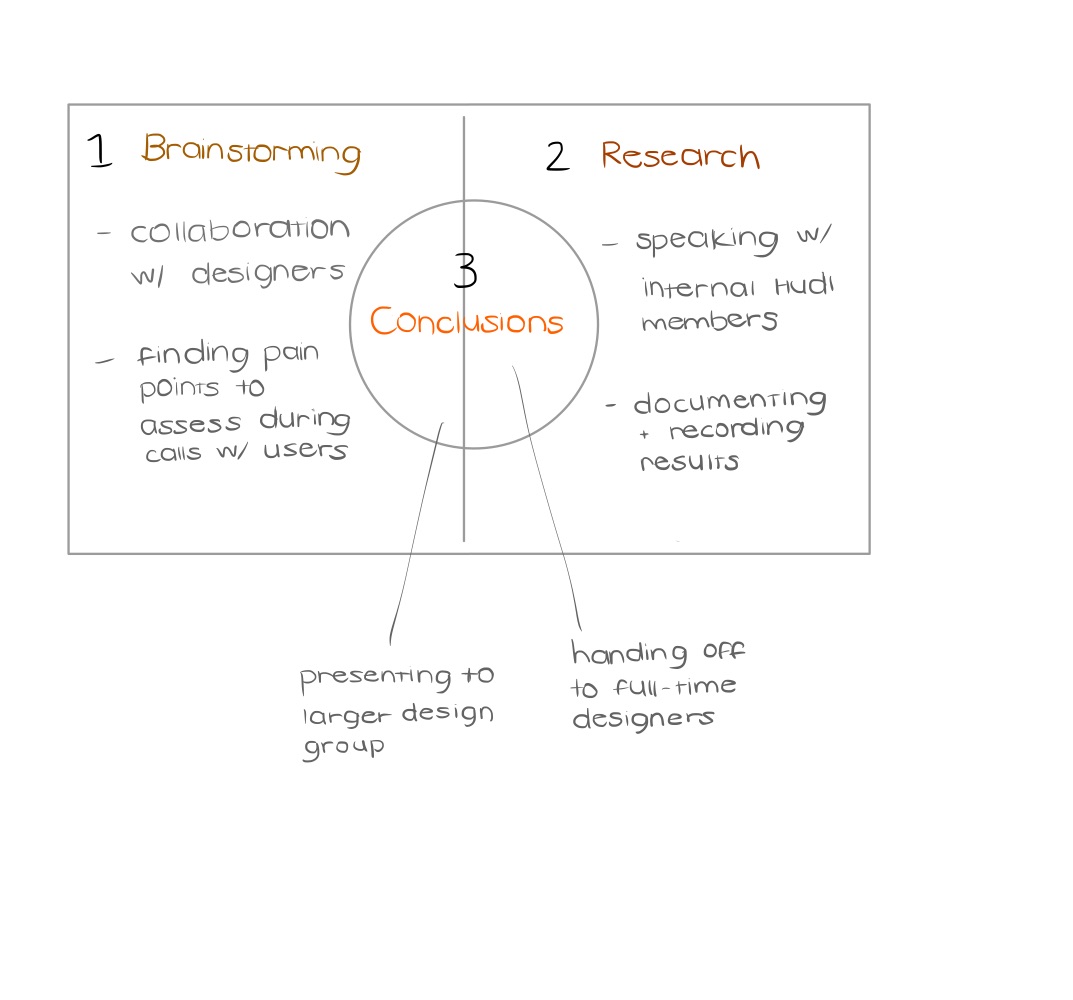
Phase 1
Brainstorming
Collaboration with designers to find pain points and assess areas for user calls.
Phase 2
Research
Speaking with internal Hudl members, documenting and recording results from usability tests.
Phase 3
Conclusions
Presenting to the larger design group and handing off findings to full-time designers.
Brainstorming
Pain Points Session
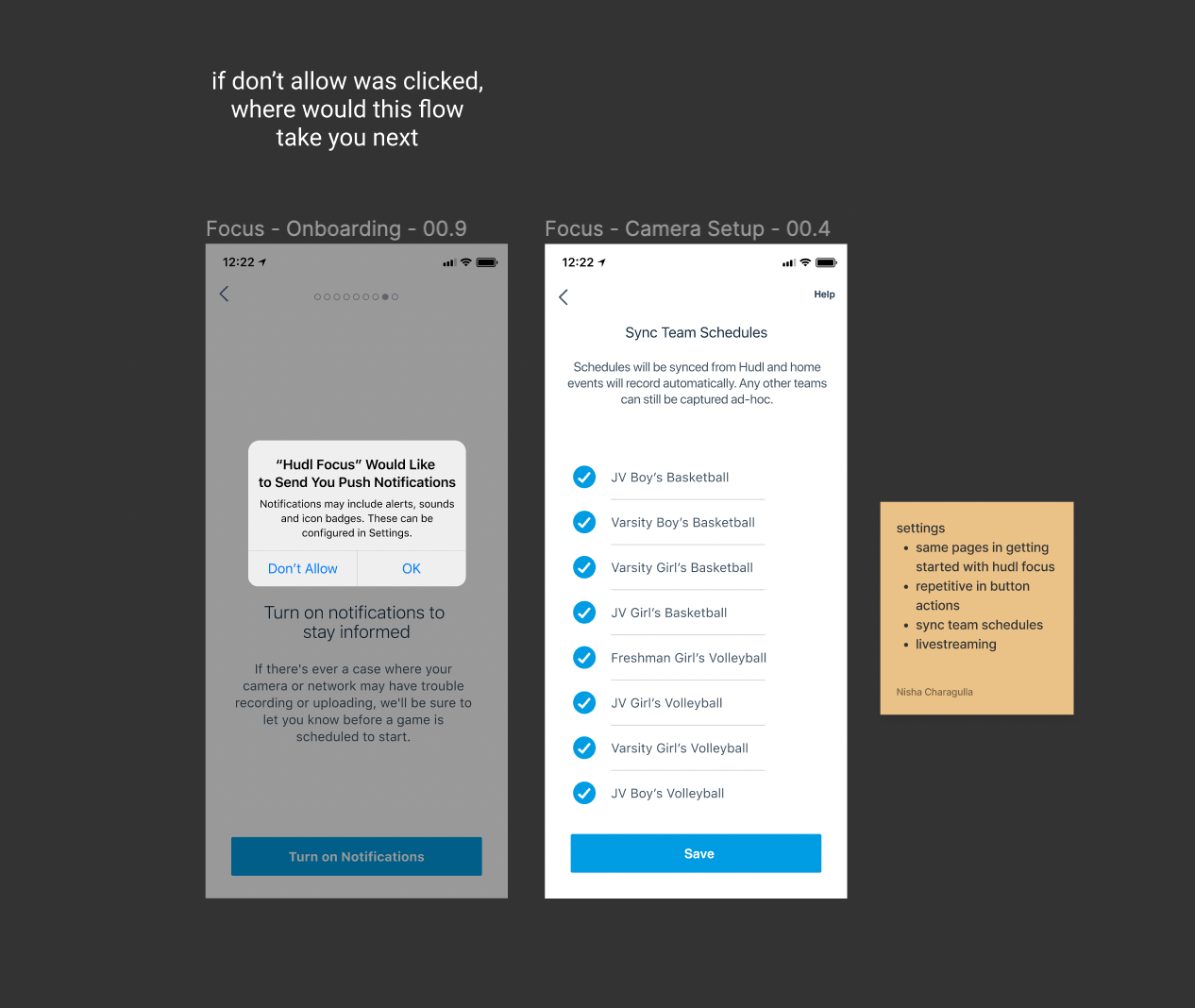
In this step of the design research process, other designers and I carefully looked at the Installation and Onboarding flows to pinpoint the main areas of navigation that needed to be re-examined.
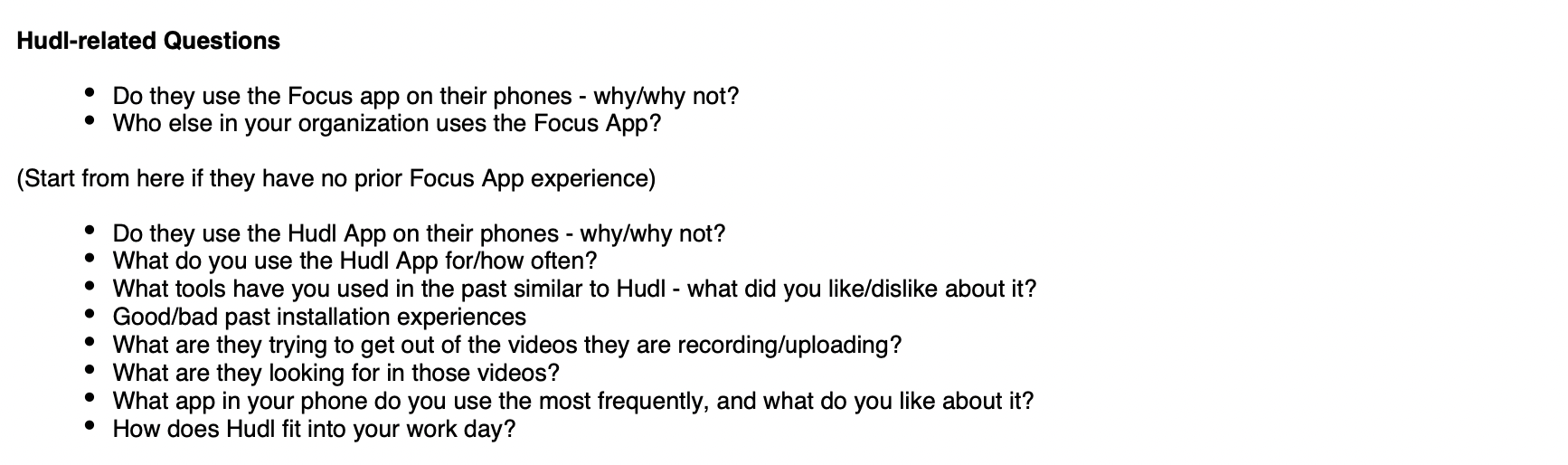
With the results of our brainstorm, I was able to carefully craft usability questions to bring up with actual users. We discussed all forms of navigation, including pagination, exits, the relevance of the continue buttons, and more.
Constructing the Usability Tests
After uncovering what we needed to discuss with users, I put together prototypes of the two relevant flows to proceed with the usability testing process. I also carefully constructed the questions with two other designers that I closely worked with at Hudl.
-1.jpg)
Usability Test Findings
I selected users from the database of people who were familiar with the Focus App and had some background in athletics. This resulted in choosing 3 internal Hudl members who were able to valuably share their insights.
User 1
- •Confusion around exiting flows
- •Expected to return to where they left off
- •Unfamiliar with hardware terminology
User 2
- •Unclear Wi-Fi connection steps
- •Wanted visual cues for progress
- •Settings and schedule were top priorities
User 3
- •Continue button preferred over swiping
- •Loader confusion after one minute
- •Wanted live view on home screen
Summary of Findings
01 — Exit & Re-entry
- •Users expected to resume, not restart
- •Would force-quit when stuck rather than risk losing progress
- •Expected gestures like “slide up” to exit the flow
02 — Help Content
- •Consulted inline links before opening the Help menu
- •Unfamiliar product terms needed in-context visuals
- •Context within the flow beat global help
03 — Progress Feedback
- •Live footage signaled end of flow naturally
- •Step counters lost value late in the flow
- •Loader anxiety kicked in around the one-minute mark
04 — Affordances
- •Continue button preferred over swipe or dots
- •Settings and Schedule topped bottom-nav mentions
- •Visible controls beat discovered gestures
Conclusions
I eventually presented this project to a larger group of designers within Hudl, to be later picked up by them for redesigning the navigational issues that were found. This design project was very research-heavy, and taught me the relevance of research in design processes from an industry standpoint.
My main takeaway is that a user's experience cannot be assumed and is best explored by directly watching their interactions and speaking to them about their thought processes.
Involving a user in the design process is an often underrated technique that really brings out what potential changes can be made to a platform.
I was also able to learn an incredible amount from the collaborative designing experience I was provided with. Alongside this project, I was given the opportunity to partake in many other design-related projects that taught me valuable lessons, in both technical and personal aspects.
40%
Increase in successful first-time installations
20%
Increase in satisfaction scores
10+
Design working sessions facilitated