Collectively: Design for Academic Collaboration
A small group formation platform helping students find research communities that fit.
My Role
UX Researcher, Product Designer, Research Paper Contributor
Year
2021
Client
Tech4Good Lab, UC Santa Cruz
Overview
Participating within research roles is a noteworthy and productive way to gain experience within your field. However, earning a spot and finding the right research group is not always easy to navigate.
Collectively is a small group formation platform for students to find areas of research that best fit them, through talking to other people. Collectively hosts spaces for students to collaborate and meet regularly, whilst gaining expertise within their field of research.
The platform was built by the Tech4Good lab at UC Santa Cruz, headed by Dr. David Lee, a research lab that helps students develop research skills and goals to gain more experience and industry knowledge.
The Challenge
Finding the right research group is hard to navigate. Students lack a structured way to discover opportunities that match their interests and goals.
The Solution
A platform where students can browse research themes, form small groups, and meet regularly, building expertise and connections within their field.
My Methods
Research Stage 1
User Research & Analyzing Findings
User Interviews
This portion of the project involved conducting several user interviews to extract relevant information. We recruited students and researchers to understand how group formation currently works and where the friction lies.
Analytical Memos
We used memos as annotations of common threads found between interviews, both for our future designs and for the ongoing research paper about small group formations.
Research Paper Contribution
Our findings contributed to an ongoing research paper exploring algorithmic and consensus-driven group formation, written in collaboration with researchers and engineers on the team.
Forming Shared Interest Pods, ACM Digital Library ↗Research Teams
Stage 1
- Dr. David Lee
- Dustin Palea
- Ana Guo
- Atira Nair
- Ryan Anderson
Stage 2
- Dr. David Lee
- Marissa Lewellen
- Krupa Patel
- Anthony Nechayev
- Allison Truong
- Atira Nair
Product Design
Ideation, Wireframing & Development
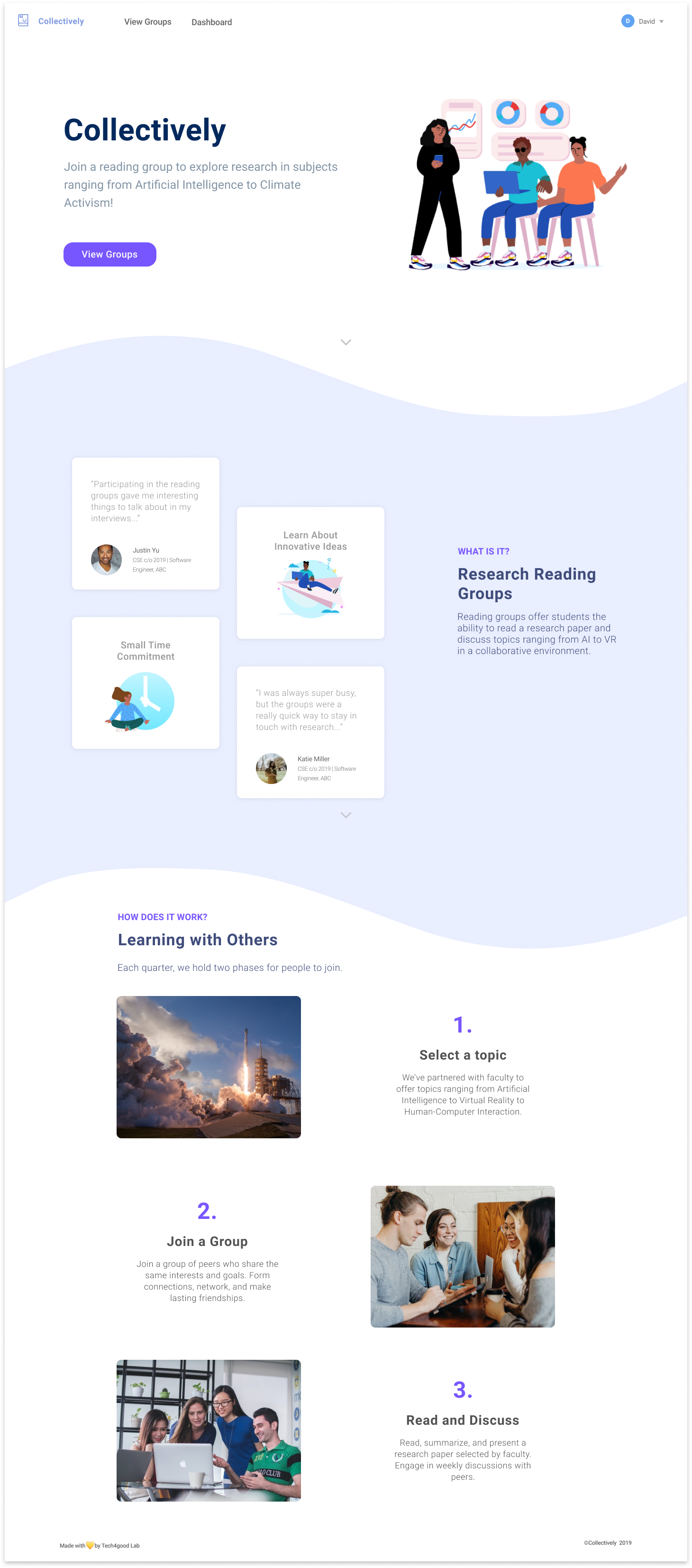
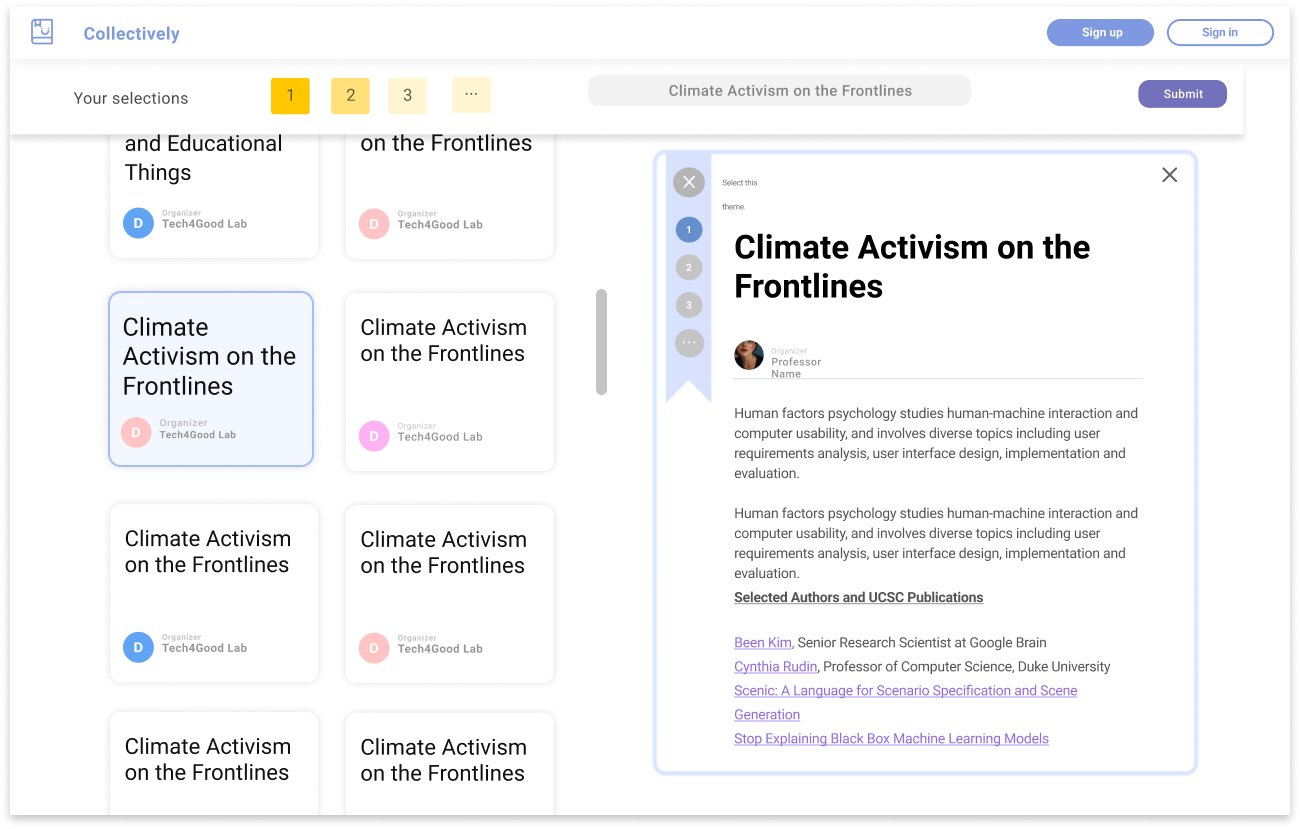
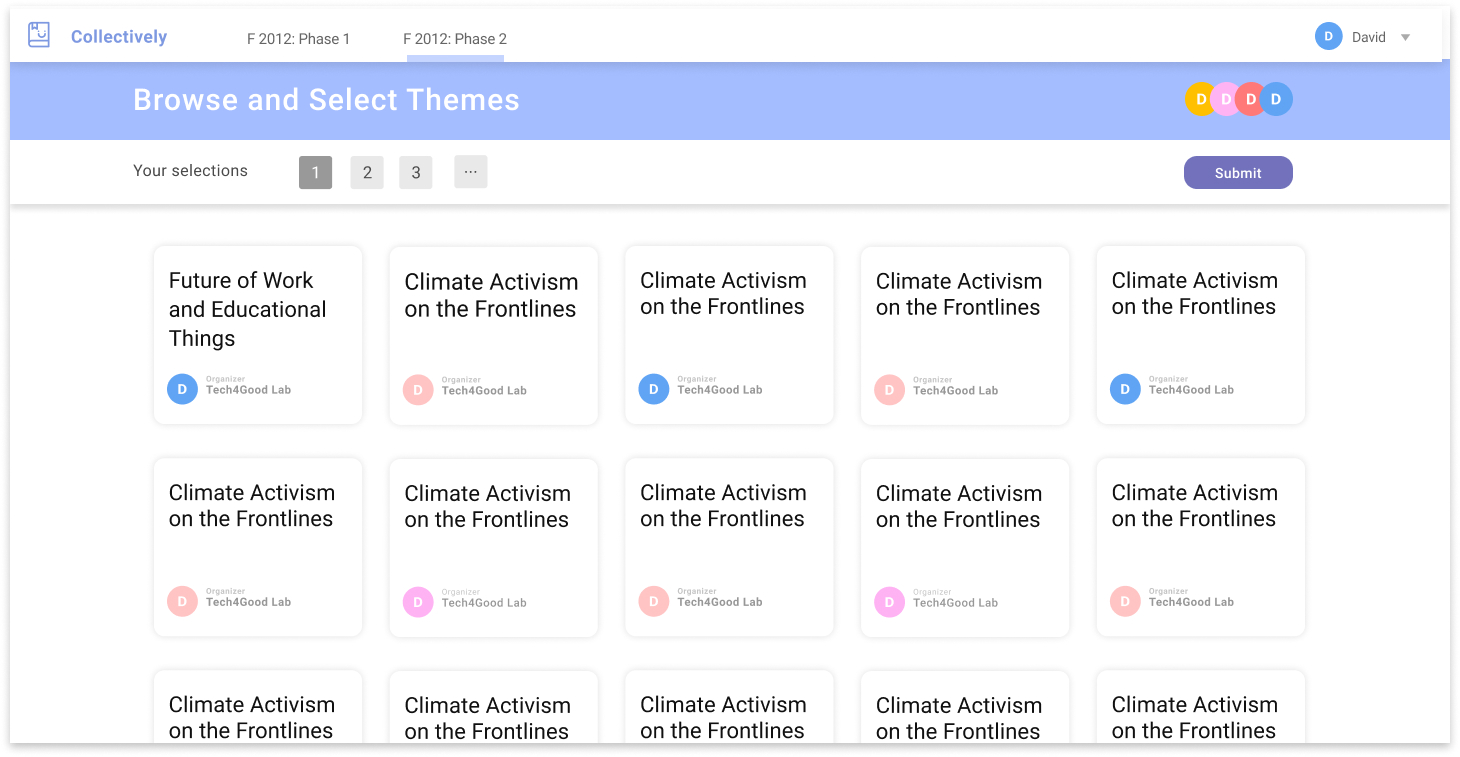
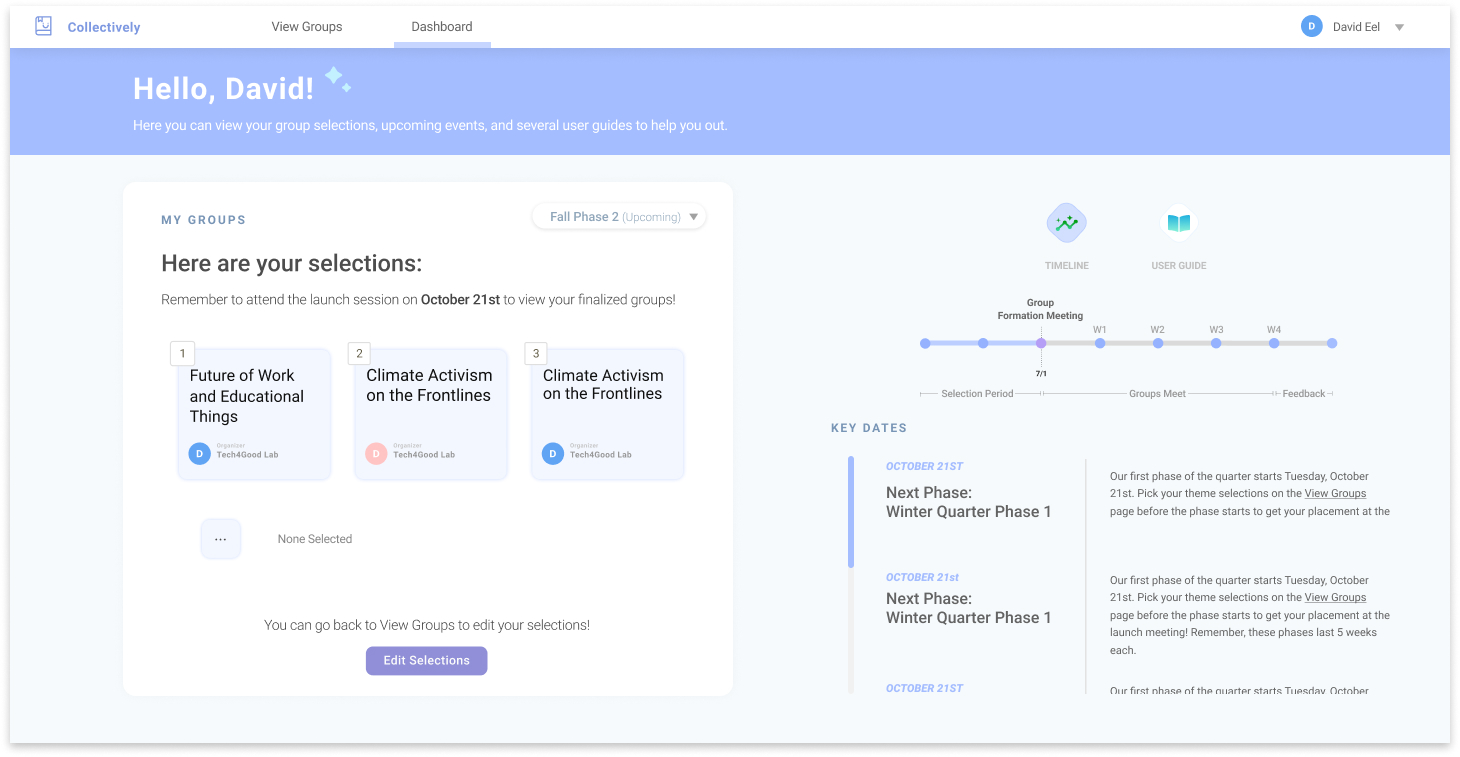
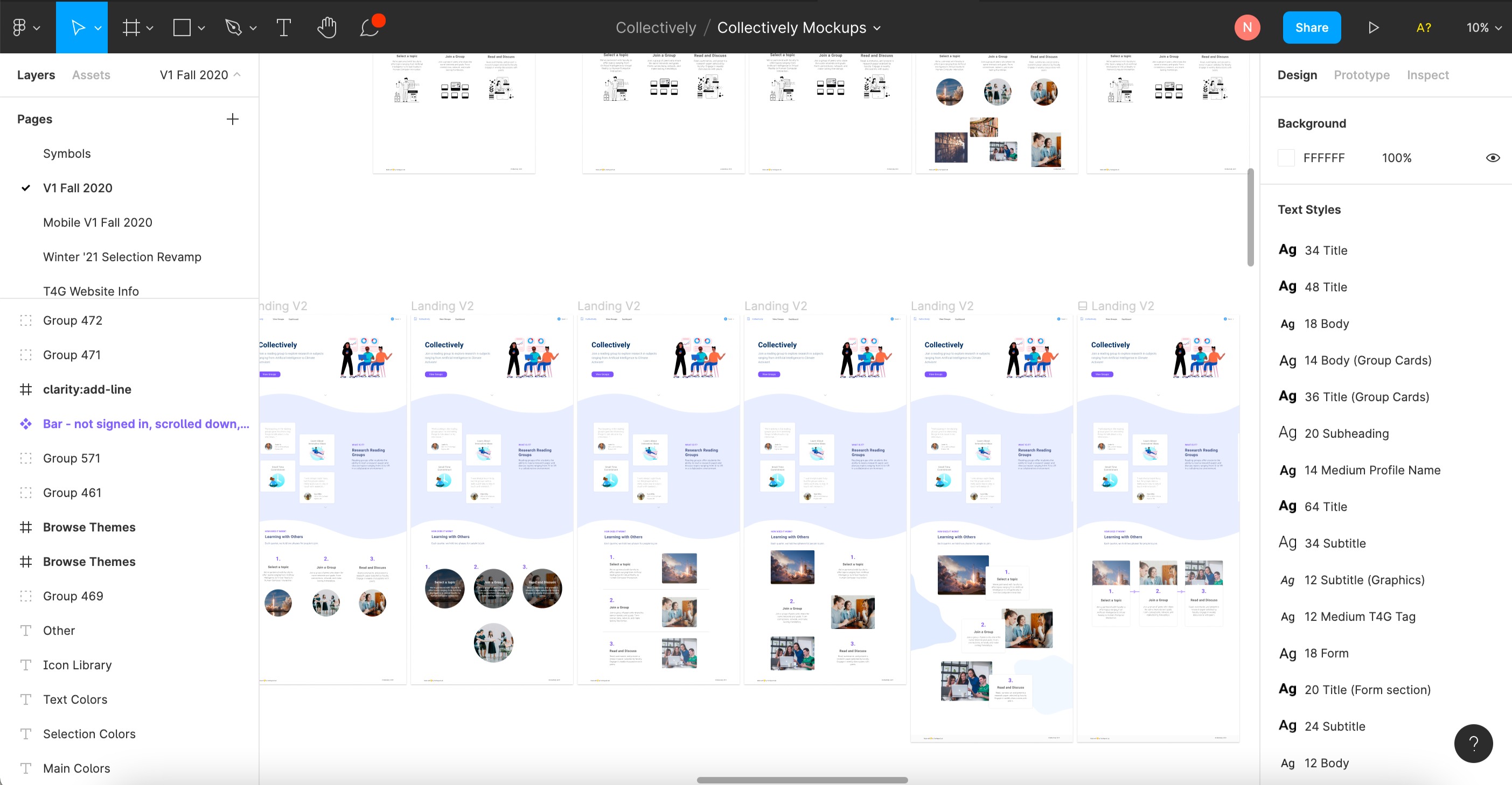
The design team was made of three people: myself, Ana Guo, and Atira Nair. Our design implementation was mainly derived from our findings within the earlier research stages. We used Figma to piece together numerous frames and iterations.
Research Stage 2
Heuristic Evaluations & Violations
The second round of research involved assessing the product with a fresh set of eyes. We used the AEDP Heuristic Evaluation guide, along with Nielsen's heuristics, to closely examine violations found within the platform.
After compiling a report of our findings, we presented back to the design and development teams to help further the project.
Reflection
This project gave me my first real exposure to end-to-end research, from conducting interviews and writing analytical memos, to synthesizing findings into design decisions, and contributing to a published research paper.
I learned how to move between researcher and designer roles within the same project, and how qualitative research directly shapes the features and flows you build.